Is there a ferry on Lake Geneva?
Yes, Lake Geneva has ferries: CGN passenger lines crossing to France at Évian, Thonon and Yvoire, plus the Geneva water taxis. How they differ from scenic cruises, what they cost in 2026 and the passport rule. This is Lac Léman in Switzerland, not Wisconsin.
 By Camille Rochat, Lake Geneva cruise specialist
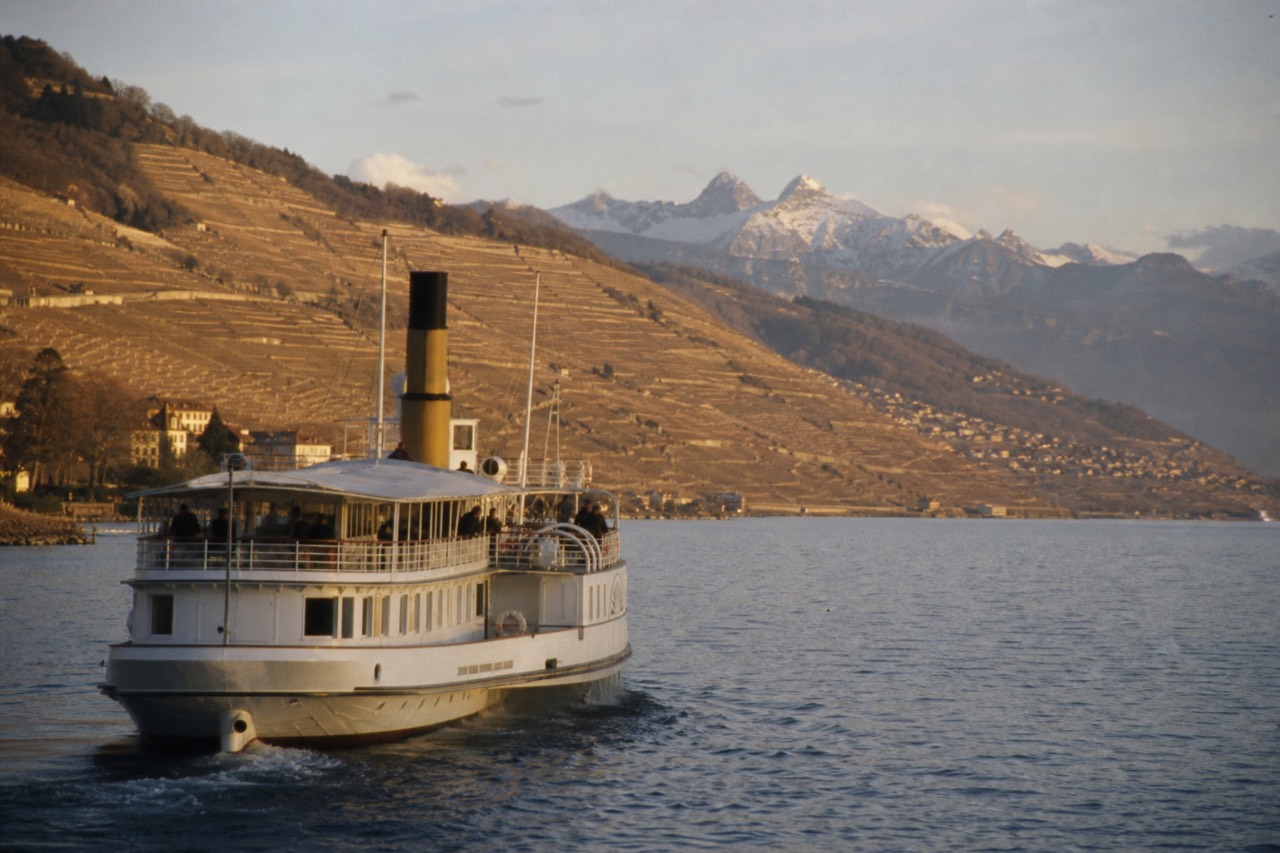
A reader mapping a Swiss trip asked a simple thing that turns out to have a layered answer: is there a ferry on Lake Geneva, or is it all sightseeing boats? Both, as it happens. This is Lac Léman, the Swiss-French lake with Geneva and its Jet d'Eau at the western end and Lausanne, Montreux and Château de Chillon along the north shore under the Alps, not the small lake in Wisconsin that fills a lot of US searches. The boats here do two different jobs, and telling them apart saves you money and confusion. For a day on the French shore, the Lausanne–Évian return ticket covers the crossing in both directions.Explore the Évian return crossing
Below is what runs as a genuine ferry, how a crossing differs from a scenic cruise, what each costs in 2026 in Swiss francs, and the passport rule that catches people out on the crossings to France.
Is there a ferry on Lake Geneva?
Yes. CGN runs scheduled passenger ferry lines across the lake, including cross-border crossings to France at Évian, Thonon-les-Bains and Yvoire, and shorter commuter links. Geneva also has the little yellow Mouettes water taxis crossing its harbour. These carry foot passengers and cyclists point to point, which is what makes them ferries rather than the sightseeing loops sold as scenic cruises.
The word ferry trips people up here because CGN, the operator that carries around 2.6 million passengers a year, runs two overlapping things on the same fleet. Some services are true crossings that take you from one shore to another on a timetable, the way a bus route would. Others are sightseeing loops that leave and return to the same pier for the view. Both are boats; only the first behaves like a ferry. The table below sorts the real crossings from the scenic trips.
| Service | Route | Crossing time | From (CHF) | Covered by Swiss Travel Pass |
|---|---|---|---|---|
| Lausanne to Évian (N1) | Lausanne-Ouchy to France | about 35 min each way | 23 one way | Yes, scheduled line |
| Lausanne to Thonon (N2) | Lausanne-Ouchy to France | about 35 min | see listing | Yes, scheduled line |
| Nyon to Yvoire (N3) | Nyon to France | about 20 min | 32 one way | Yes, scheduled line |
| Geneva Mouettes water taxis | Across Geneva harbour | 4 to 6 min | 2 | Not a CGN pass service |
| Geneva 50-minute scenic loop | Geneva harbour and back | 50 min | 20 | Yes, scheduled line-cruise |
Everything on Lake Geneva Cruises makes this split plain, the point-to-point crossings kept separate from the sightseeing loops, so you book the boat that does the job you actually want.
What are the CGN cross-lake ferry lines?
CGN Mobilité runs the lake's cross-border ferry lines: N1 from Lausanne-Ouchy to Évian, N2 from Lausanne-Ouchy to Thonon-les-Bains, N3 from Nyon to Yvoire, and the shorter N4 commuter link near Geneva. In peak periods the lines together run up to around 120 daily crossings. They are passenger ferries built for commuters and day-trippers, not sightseeing cruises.
These N-lines are the backbone of the lake's ferry network, and the operator markets them as public transport rather than tourism. Its own page, cgn.ch, presents them as the ecological, road-sparing way to cross between the Swiss and French shores. The N1 from Lausanne-Ouchy reaches Évian in about 35 minutes; the N3 from Nyon reaches the medieval village of Yvoire in roughly 20. Fares are transport fares, so a single Nyon to Yvoire adult ticket in second class is CHF 32, or CHF 46 in first, and a Lausanne to Évian single sits in the CHF 23 to 29 range in second class.
Because they are scheduled public services, these crossings are covered free by the Swiss Travel Pass, which changes the maths for anyone already holding one for their rail travel. What they are not is a leisurely narrated loop; you board, you cross, you arrive. If your aim is to actually stand in France for lunch, the ferry is the right tool. For the full picture of the France-shore trips, the Yvoire and Évian cross-border cruises guide covers what waits on the far side.
| Line | From | To | Crossing | Single, 2nd class |
|---|---|---|---|---|
| N1 | Lausanne-Ouchy | Évian, France | about 35 min | CHF 23 to 29 |
| N2 | Lausanne-Ouchy | Thonon, France | about 35 min | see listing |
| N3 | Nyon | Yvoire, France | about 20 min | CHF 32 |
| N4 | Corsier | Bellevue, near Geneva | short hop | commuter fare |
What is the difference between a ferry crossing and a scenic cruise?
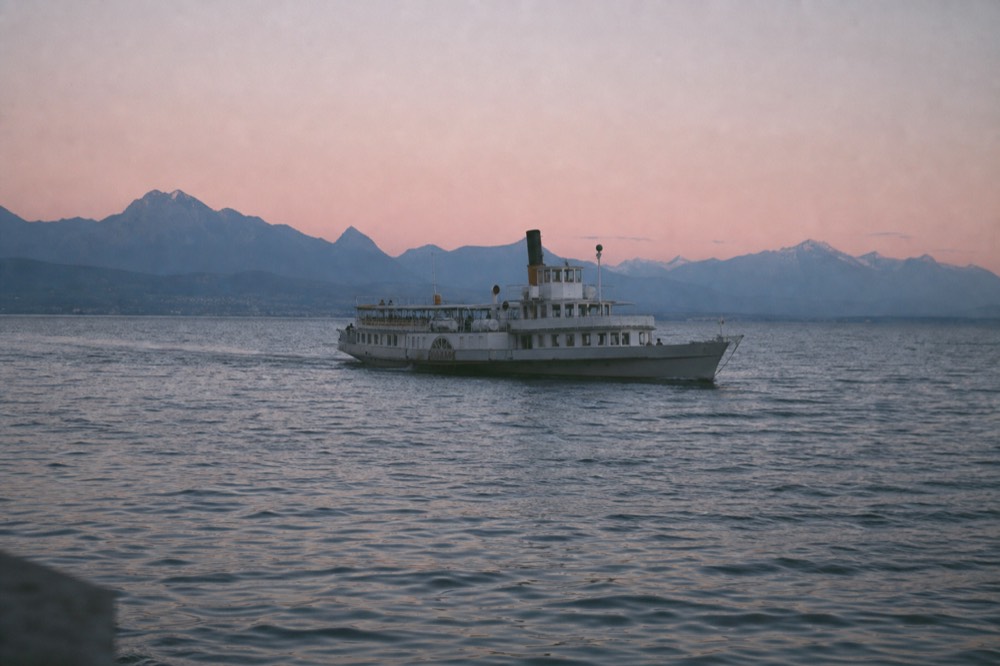
A ferry crossing takes you point to point on a timetable, from one shore to another, and is priced as transport. A scenic cruise leaves and returns to the same pier and is priced for the experience, often longer and narrated. The Lausanne to Évian crossing is a ferry; the two-hour Riviera loop from Montreux is a cruise. The same operator runs both.
This is the distinction that decides which boat you want. If you are trying to get somewhere, a French village for the afternoon, the opposite shore to pick up a train, you want a crossing: shorter, cheaper per trip, timetabled. If you are trying to see the lake, the vineyards and the castle from the water, you want a scenic cruise, which costs more because the point is the view, not the arrival. The Geneva 50-minute loop, rated 4.3 across more than 4,000 reviews and starting from about CHF 20, is a scenic loop even though it is a scheduled CGN service; it returns you to where you started.
The confusing overlap is that a few scheduled line-cruises do both jobs at once: the two-hour Riviera route passes real scenery and also stops at real piers, so you can ride it as a sightseeing trip or hop off at Vevey or Chillon. That flexibility is why the Riviera cruise appears in so many plans. For getting between the big towns specifically, the cheapest way from Geneva to Montreux weighs the boat against the train.
| Feature | Ferry crossing | Scenic cruise |
|---|---|---|
| Purpose | Get from one shore to another | See the lake from the water |
| Route | Point to point on a timetable | Loops back to the same pier |
| Typical length | 20 to 35 minutes | 50 minutes to 3 hours |
| Priced as | Transport | The experience |
| Swiss Travel Pass | Free on scheduled lines | Free on scheduled line-cruises |
The practical read is to look at what you are actually trying to do. A crossing is the cheaper, faster choice when the far shore is the destination and the boat is just the means. A scenic cruise is worth the higher fare when the water itself is the point, the vineyards, the castle and the Alps unrolling past the rail. Plenty of visitors do both across a trip: a scenic Riviera loop one day for the views, a ferry across to France another day for lunch in a medieval village. Knowing which is which stops you paying cruise money for a crossing, or expecting scenery from a boat built to commute.
One more axis separates the two: time aboard. A crossing is over in twenty to thirty-five minutes because the point is the far shore, whereas a scenic cruise runs anywhere from fifty minutes to three hours, and the rundown of how long a lake cruise runs matches each route to the hours it eats. Some scheduled sailings blur the line further by adding a kitchen: a gourmet or fondue evening is a scenic cruise with a meal aboard, covered in the post on whether there is a dinner cruise on the lake. None of that changes the passport rule for the France crossings, but it does mean one fleet can sell you a four-minute hop, a three-hour vineyard loop or a plated dinner, and knowing which you booked is half the battle.
Are the Geneva water taxis a ferry?
Yes, in the everyday sense. Geneva's little yellow Mouettes are public water taxis that cross the harbour on four short routes, roughly every ten minutes, taking four to six minutes a hop. A short ticket is about CHF 2, or CHF 3 for sixty minutes, and they are free with a Geneva Transport Card from your hotel. The fleet now runs fully electric and solar.
The Mouettes are the cheapest way to be on Lac Léman at all, and locals use them as genuine transport, not a tour. Four routes stitch the two sides of Geneva's harbour together near the Jet d'Eau, running frequently through the day. They will not show you the fountain from open water the way the scenic loop does, and they are not a CGN service, so they sit outside the Swiss Travel Pass boat network, though many hotels hand guests a transport card that covers them. As a two-franc crossing with the water under your feet, nothing on the lake is cheaper.
The trade-off is obvious once you see it: the Mouettes are transport, the scenic loop is a sightseeing trip. If you want to say you were on Lake Geneva and spend almost nothing, ride a Mouette across the harbour. If you want the Jet d'Eau, the grand hotels and the Alps laid out from open water, take the loop instead.
Do the cross-border ferries to France need a passport?
Yes. The crossings to Évian, Thonon and Yvoire land you in France, so they are international routes and you must carry a valid passport or national ID. Customs checks can happen. The Lausanne to Évian roundtrip runs about 35 minutes each way from roughly CHF 44, and Évian is a spa town, source of the mineral water, while Yvoire is a classified medieval village on the French shore.
This is the rule that catches day-trippers who treat the lake as one country. It is not: the southern shore is France, and a boat that crosses to it is crossing a border. Bring the document you would bring to fly. The reward on the far side is real. Évian-les-Bains is a historic thermal town, the source of Évian water, with spa baths along the lake. Yvoire, reached on the N3 from Nyon, is one of the "Plus Beaux Villages de France," fortified in the 14th century and nicknamed the "perle du Léman."
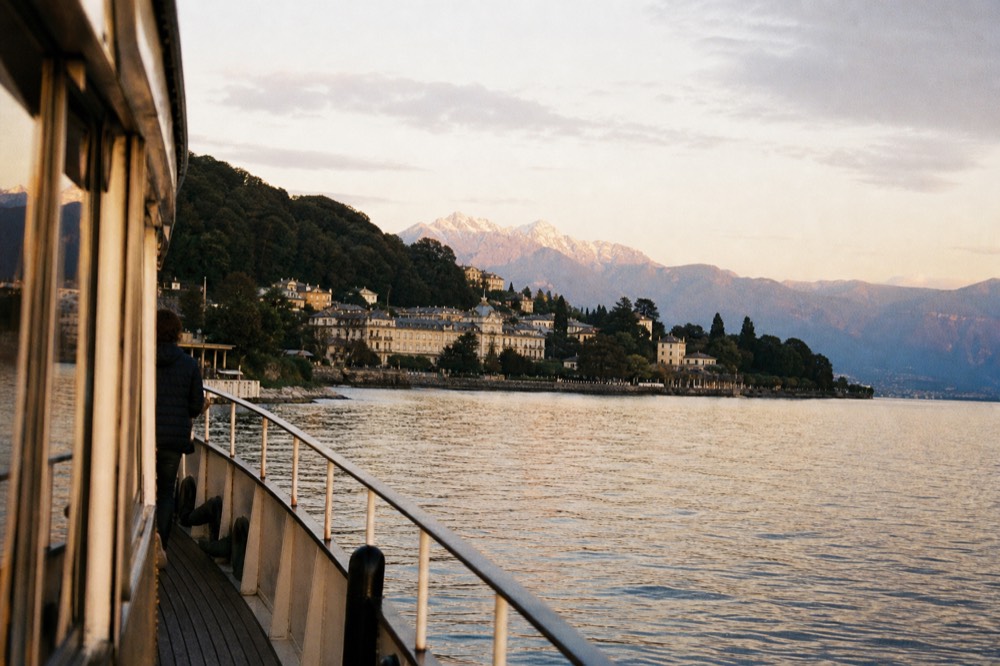
A Lausanne–Évian return ticket covers the water journey to France and back. Its rating sits on the live listing rather than being printed here.
What is on the French shore, at Évian and Yvoire?
Évian-les-Bains is a historic spa town, the source of the mineral water that carries its name, with thermal baths along the lake and a genteel Belle Époque waterfront. Yvoire is a fortified medieval village, one of the "Plus Beaux Villages de France," with 14th-century ramparts, a château and flower-hung lanes. Both make an easy half-day off the ferry.
The crossings are worth taking partly for where they land you. Évian sits directly across from the Swiss shore and has traded on its water for two centuries; the town marked the 200th anniversary of its bottling in 2026 and hosted a G7 summit that June, so it is used to visitors. The draw for a day-tripper is the lakefront itself, the thermal spa, and the walk along a promenade that feels a world away from the working piers on the Swiss side. It is a slower, softer place than Geneva or Lausanne, built for taking the waters rather than rushing.
Yvoire is the other reward, and the more photogenic. Classified among the most beautiful villages in France since 1982 and the only one in Haute-Savoie, it kept its medieval bones: stone gates, a castle, narrow lanes spilling with flowers, and a small harbour where the N3 ferry from Nyon ties up. Locals call it the "perle du Léman," the pearl of the lake, and on a summer afternoon it earns the name. The trick with both is the return timetable. Because the 2026 ferry schedule leans toward commuter hours, check the sailing back before you settle in for a long lunch, so you are not stranded on the wrong shore when the last convenient crossing has gone.
Is the ferry free with the Swiss Travel Pass?
On CGN's regular scheduled lines, yes, including the cross-border crossings to France, so a pass holder rides the Lausanne to Évian or Nyon to Yvoire ferry at no extra cost. The Half Fare Card gives 50 percent off single tickets instead. Special, dining and private charter cruises are not covered, and the Geneva Mouettes water taxis sit outside the CGN pass network.
The pass is the biggest lever on ferry cost, and its logic is clean once you hold the distinction. Anything that is a regular scheduled CGN line, crossing or scenic line-cruise, is free with the Swiss Travel Pass, per myswisstravelpass.com. The exceptions are the special experiences: fondue, gourmet and private charters. The full rules are laid out in the post on whether the Swiss Travel Pass covers CGN boats.
Has the ferry service changed for 2026?
The 2026 ferry timetable varies by route, season and day of the week. The N1 Lausanne–Évian service includes daytime departures and weekend sailings as well as commuter trips. Check your exact date and the last return before planning time in France.
The operator publishes separate N-line timetables, and the intervals are not identical throughout the day. A roundtrip ticket bought through a booking platform uses the scheduled service; it does not create a separate leisure ferry outside that timetable. Leave enough time for the return crossing and check operational updates before setting off.
The answer for the trip-planner: yes, Lake Geneva has ferries, real ones that cross to France and short water taxis in Geneva, alongside the scenic cruises. Pick a crossing when you want to arrive somewhere, a scenic cruise when you want to see the lake, and carry your passport for anything that touches the French shore.
Common questions about ferries on Lake Geneva
Is there a car ferry on Lake Geneva?
The CGN cross-lake services are passenger ferries, built for foot passengers and cyclists commuting or day-tripping between the Swiss and French shores. Bring your bike aboard where allowed, but plan the crossings as passenger routes, and check the current CGN timetable for your date because times differ by route and day.
How much is the ferry across Lake Geneva to France?
A single adult second-class Nyon to Yvoire ticket is CHF 32, or CHF 46 in first class. A Lausanne to Évian single sits in the CHF 23 to 29 range, with a roundtrip tour sailing from about CHF 44. Fares are in Swiss francs, and booking platforms convert to your home currency at checkout.
Do I need a passport for the ferry to Évian or Yvoire?
Yes. Évian, Thonon and Yvoire are in France, so these are international crossings and you must carry a valid passport or national ID. Occasional customs checks can happen. Keep the document on you for the return leg as well.
Are the Geneva water taxis a ferry?
In practice, yes. The yellow Mouettes cross Geneva's harbour on four short routes every ten minutes or so, taking four to six minutes, for about CHF 2. They now run a fully electric and solar fleet. They are transport rather than a CGN pass service, and free with a Geneva Transport Card from many hotels.
How often do the ferries to France run?
It varies by line and day. The 2026 N1 timetable includes daytime and weekend services as well as commuter departures. Check the current CGN timetable for your date, and note the last sailing back before you settle in on the far shore.
Is the ferry free with the Swiss Travel Pass?
On CGN's regular scheduled lines, yes, including the crossings to France, so a pass holder crosses at no extra cost. The Half Fare Card gives 50 percent off instead. Special, dining and private charter cruises are not covered, and the Geneva Mouettes water taxis sit outside the CGN pass network.
Choose Your Lake Geneva Experience
Have a day in mind for France? Check the Évian return crossing before arranging lunch and your onward travel.
Lausanne to Evian Cross-Border Cruise
A return crossing to Évian, around 35 minutes each way, with time ashore at your own pace.
Compare options and tailor this choice
- Reach France and return: Return transport from Lausanne to Évian, with independent time ashore. Time in Évian is additional. Check the return timetable and your border documents. No guided town tour.
- See Geneva and return to the same pier: 50-minute loop with downloaded audio, no French landing. Mont-Blanc pier, Quai du Mont-Blanc 1. Food and drinks extra.
Initial recommendation. Confirm the selected option, suitability and departure on the booking page.
Scheduled dates from Viator. Final availability and price are confirmed on Viator.
Time in Évian is additional. Check the return timetable and your border documents. No guided town tour.