Is Lake Geneva, Switzerland worth visiting?
Is Lake Geneva in Switzerland worth visiting? A grounded look at Lac Léman, from Geneva and the Jet d'Eau to Lausanne, the Lavaux vineyards, Montreux and the Château de Chillon, what it costs, and how a boat is the way to see it. This is the Swiss lake, not Wisconsin.
 By Camille Rochat, Lake Geneva cruise specialist
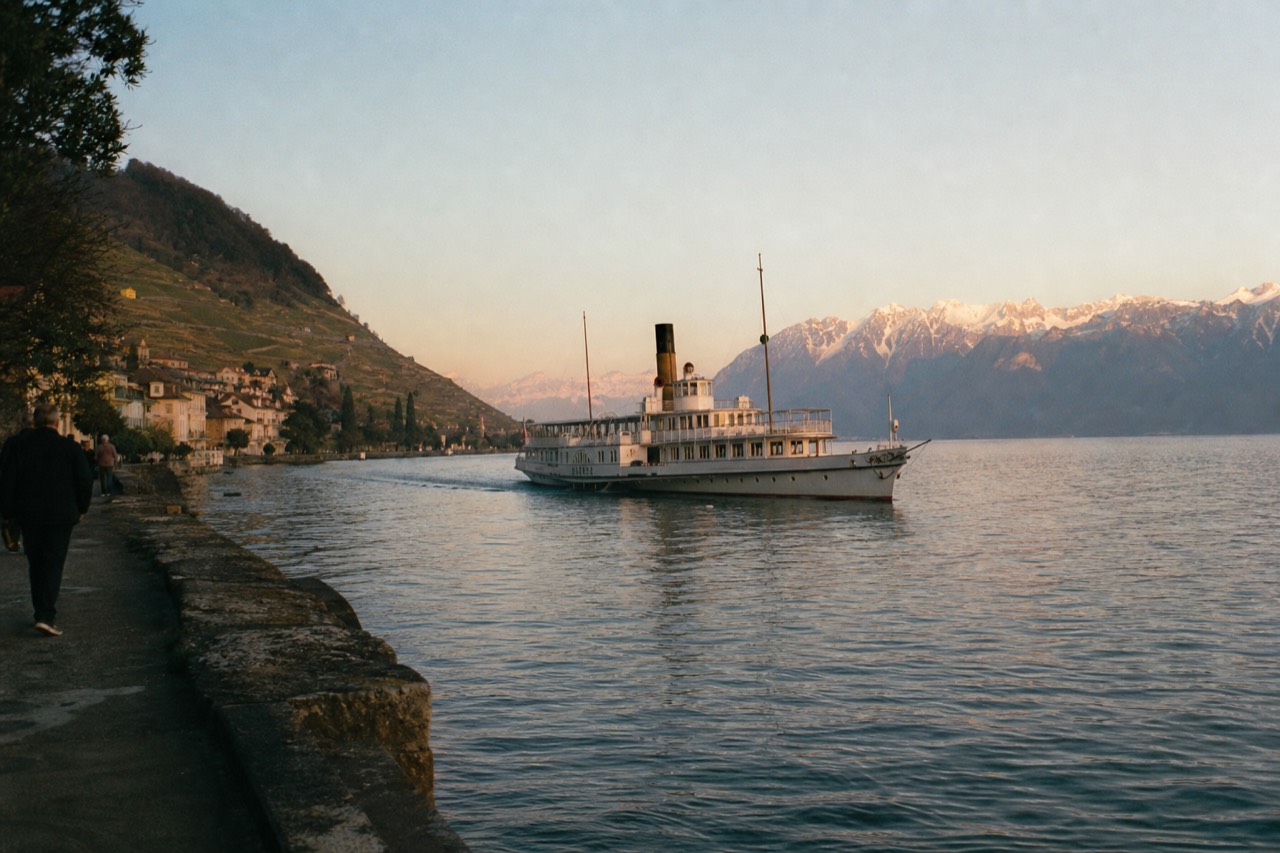
Type "is Lake Geneva worth visiting" into a search box from a US laptop and the first answers often describe a small resort town in Wisconsin, with its own beaches and lakefront ice cream. This page is about the other one. Lac Léman, the Swiss name locals use, is a huge crescent of water between Geneva and Montreux, with the Alps standing across the far shore and the Château de Chillon sitting on its rock at the eastern end. Switzerland holds about sixty percent of it and France the rest, and it is one of the largest lakes in Western Europe. For the eastern-lake setting, the Montreux route brings Chillon’s shoreline into a manageable two-hour outing.Explore the Riviera boat route
So the question people are really asking is whether this Swiss lake earns a place on a tight Alpine itinerary, or whether it is just a pretty stop between Geneva airport and the mountains. The short version is below, then the honest detail: what is actually here, how much of your time it takes, what it costs, and why so many visitors end up seeing it from the deck of a boat rather than the window of a train.
Is Lake Geneva, Switzerland worth visiting?
Yes, for most trips it is worth visiting. Lac Léman packs the Jet d'Eau in Geneva, the lakeside cities of Lausanne and Vevey, the UNESCO Lavaux vineyards, the resort town of Montreux and Switzerland's most-visited monument, the Château de Chillon, along one shoreline backed by the Alps. A half day fits a boat trip; two days does it justice.
The lake works on two levels. On the surface it is scenery, and the scenery is genuinely first rank: terraced vineyards dropping to the water, snow peaks across the lake even in summer, a medieval castle you can reach by boat. Underneath that, it is a string of real Swiss towns you can move between by scheduled boat, each with its own reason to stop. Geneva has the fountain and the international quarter. Lausanne has the Olympic Museum and a steep old town. Montreux and Vevey have the Riviera promenade and the festival calendar.
What makes it worth the detour is that all of this sits close together. You can be at the Jet d'Eau in the morning and watching the sun go down behind the Lavaux terraces the same evening, and the water links every stop. The lake is not a single sight you tick off in twenty minutes. It is a region you can spend anywhere from an afternoon to several days on, and it rewards whichever end of that range your trip allows. The Britannica entry on Lake Geneva sets out the basic geography if you want the map view first. For why this particular lake became so celebrated, the post on why Lake Geneva is so famous traces the fountain, the vineyards and the castle behind the reputation.
What is actually around the lake?
The shoreline holds a lot in a short span: Geneva and its Jet d'Eau at the western tip, Nyon and its castle, Lausanne with the Olympic Museum at Ouchy, Vevey and Montreux on the Riviera, the Lavaux vineyard terraces between them, and the Château de Chillon near Villeneuve. The French shore adds Yvoire, Thonon and Évian.
Think of the lake as a crescent read left to right. The western end, around Geneva, is the urban, international corner: the fountain, the Old Town, the parks and the UN quarter. Move east along the northern Swiss shore and the mood shifts to wine country and resort towns. Lausanne is the mid-lake hub, a university city climbing a hillside, with the boat piers down at Ouchy. Past it, the Lavaux terraces climb straight from the water, a working landscape of Chasselas vines that has been farmed since monks planted the slopes.
Keep going and you reach the Riviera proper. Vevey is the quieter of the twin towns, with a market square opening onto the lake and Chaplin's old home in the hills above. Montreux is the flashier one, with its lakeside promenade, the statue of Freddie Mercury and a jazz festival that fills the town every July. Just beyond Montreux, the Château de Chillon rises off the shore, the most-visited historic monument in Switzerland. Across the water, the French side offers the medieval village of Yvoire and the spa town of Évian, each an easy boat hop but an international one. For a ranked walk through these sights town by town, the round-up of things to do around the lake goes deeper on each stop. The table below is the quick orientation.
| Place | Where on the lake | What it is known for |
|---|---|---|
| Geneva | Western tip | Jet d'Eau, Old Town, UN and international quarter |
| Nyon | Petit Lac, west | Lakeside castle, Roman roots |
| Lausanne-Ouchy | Mid-lake, north shore | Olympic Museum, lakefront promenade, boat hub |
| Vevey | Riviera, north | Market square, Chaplin's World above town |
| Montreux | Riviera, north | Promenade, jazz festival, Freddie Mercury statue |
| Lavaux | Between Lausanne and Vevey | UNESCO vineyard terraces above the water |
| Château de Chillon | Near Villeneuve, east | Switzerland's most-visited monument |
| Yvoire / Évian | French south shore | Medieval village and spa town, passport needed |
Once you can see how close these sit, the appeal is obvious.
Everything on Lake Geneva Cruises is grouped this way, by which town you set off from and how long you want to be on the water, so you can match a trip to the time your itinerary can spare.
How much time do you really need?
Half a day is enough for a first taste: a short cruise plus a walk along one town's promenade. A full day lets you pair a Riviera or Lavaux cruise with the Château de Chillon. Two to three days turns the lake into a proper base, splitting time between Geneva, Lausanne and the Montreux Riviera at a relaxed pace.
Time is the honest hinge of the "worth it" question. If your Swiss trip is really about the high Alps and you have one spare afternoon in transit, the lake still delivers: a fifty-minute loop off Geneva, or an hour walking the Ouchy waterfront, is a real memory rather than a filler. Nobody needs to feel they have shortchanged the region by giving it half a day.
Give it a full day and the maths improves sharply. You can take a scheduled boat from Montreux or Lausanne down to Chillon, tour the castle, and be back for dinner on the Riviera. Stretch to two or three days and the lake stops being a stop and becomes the trip itself, with time for the Lavaux vineyards, a museum in Lausanne, an evening in Montreux and a hop across to France. The table sets out what each time budget buys.
| Time you have | What fits comfortably | What to skip |
|---|---|---|
| Half a day | One short cruise plus a lakefront walk | The castle interior, France crossings |
| One full day | A Riviera or Lavaux cruise plus Château de Chillon | A second town, a leisurely lunch stop |
| Two to three days | Geneva, Lausanne, the Riviera and a France hop | Nothing major; this is the comfortable range |
| A week | The whole shoreline at a slow pace, plus wine tasting | Rushing anywhere |
The point of the table is that there is no wrong amount of time to give the lake. It scales. Where a lot of Alpine sights punish a short visit, this one repays even a stolen afternoon, and repays a longer stay more. For a deeper look at whether the boat itself justifies the ticket, the companion post on whether a lake cruise is worth it works through the value question trip by trip.
How do you reach the lake and its boats?
Getting to Lac Léman is easy. Geneva sits at the western tip with an international airport minutes from the lakefront, and fast Swiss trains link Geneva, Lausanne, Vevey and Montreux along the north shore, most legs under about ninety minutes. The boats then leave from central piers in each town, so the water is rarely more than a short walk from the station.
Few famous lakes are this simple to reach. Geneva is a common arrival point, and from its lakefront the scheduled boats set off toward the Petit Lac. Along the northern shore, the main railway threads every lakeside town, so hopping from Geneva to Lausanne, or Lausanne to Montreux, is a quick, frequent train ride rather than a day's expedition. That is what makes it realistic to see the fountain and the castle inside a single day.
The piers themselves are central and well signed. In Geneva the boats leave mainly from Genève-Mont-Blanc, with some sailings from the Jardin Anglais quay across the Rhône. Lausanne's boats go from Ouchy, down by the Olympic Museum, while Vevey, Montreux and the Chillon landing stage each have their own quay beside the castle. If you plan to sail more than once or ride the trains widely, a Swiss Travel Pass covers both the scheduled boats and the rail network, which is worth comparing against individual tickets across your complete itinerary. The guide on reaching Montreux and the shore by boat maps the routes. Lausanne itself makes a handy mid-lake base, and the guide to cruises from Lausanne-Ouchy covers the departures in both directions.
What does it cost to get on the water?
A short scenic boat trip starts at about CHF 20 for the 50-minute Geneva loop. A two-hour Riviera cruise from Montreux or Vevey runs from about CHF 38, and a three-hour Lausanne cruise along the Lavaux terraces from about CHF 44. The Château de Chillon crossing from Montreux is roughly CHF 32. Prices show in Swiss francs and convert to your currency at checkout.
Switzerland is not a cheap country, so the fact that its most famous lake opens up for around twenty francs is worth appreciating. The single biggest driver of the fare is duration, and duration tracks the scenery. Geneva sits at the narrow western end, so its trips are short and cheap. The postcard views, the vineyards and the castle, live at the eastern end, where the cruises run two to three hours and cost more to match. Add a private boat, a first-class deck or a meal, and the number climbs again.
The fares below are real, currently bookable Swiss-franc figures. Because the booking platforms show each visitor their own home currency at checkout, an American will see dollars and a Briton pounds; the franc figure is the stable anchor underneath. If you already hold a Swiss Travel Pass for your rail travel, most of these scheduled boat trips are free, which changes the sum entirely, and the post on what the Swiss Travel Pass covers on the boats sets out exactly which sailings it includes.
| Trip | From (CHF) | Duration | What the fare buys |
|---|---|---|---|
| Geneva 50-minute loop | 20 | 50 min | The Jet d'Eau and Petit Lac shoreline |
| Montreux or Vevey Riviera cruise | 38 | 2 hours | Chillon and Vevey shore, Alps views |
| Lausanne to Lavaux cruise | 44 | 3 hours | The UNESCO vineyard terraces from the water |
| Montreux to Château de Chillon | 32 | 2 hours | The castle by boat; admission is separate |
| Lausanne to Évian, France | 44 | about 35 min each way | A cross-border hop; passport or ID needed |
Both fares localise to your own currency once you open the listing.
Why is the boat the way to see it?
The best of the lake faces the water, not the road. The Lavaux vineyard terraces, the Château de Chillon and the sweep of the Alps all read best from the deck of a boat, and scheduled sailings link the towns as ordinary transport. A cruise is the one activity that turns the whole shoreline into a single moving view rather than a set of separate stops.
A car or a train shows you the lake in glimpses, from behind buildings and through cuttings. The water gives you the uninterrupted version. The Lavaux terraces in particular were built to be seen from below, and the boat is the only vantage that lines up the stone walls, the vines and the lake in one frame. The castle at Chillon sits with its foundations in the water, so the approach by boat is the approach it was built for.
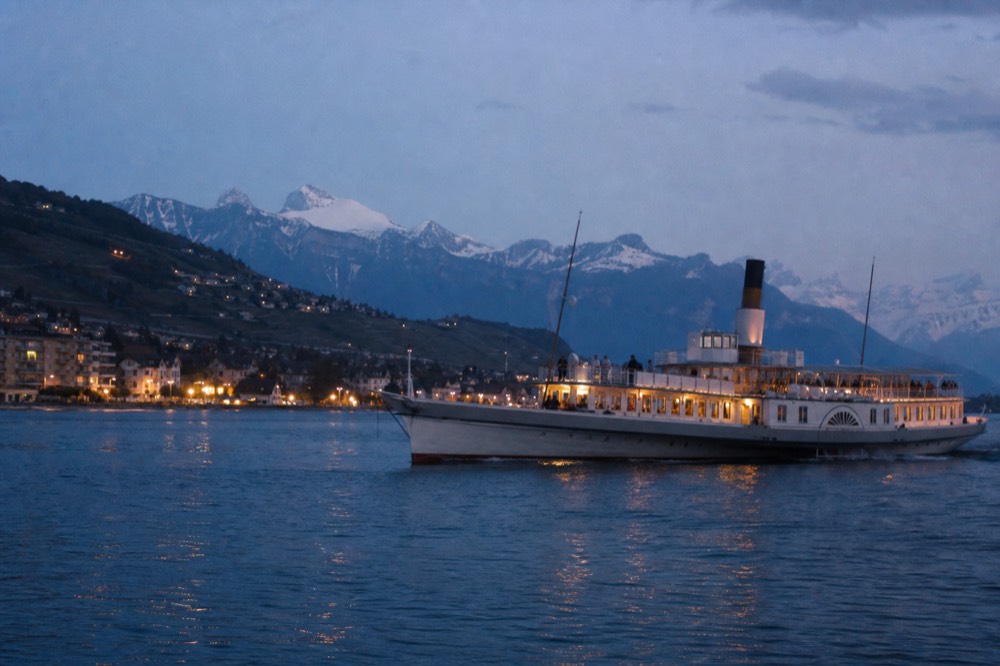
There is a practical layer too. The operator, CGN, runs a fleet of about nineteen vessels and carried roughly 2.6 million passengers in 2025, so this is real scheduled transport, not a novelty. Its routes stitch Geneva, Lausanne, Vevey, Montreux and Chillon together, and eight of its boats are historic Belle Époque paddle steamers, the largest such fleet on any lake. Riding one of those is a sight in itself. The official CGN site lists the scheduled circuits, and the regional board at myswitzerland.com frames how the cruises fit a wider Swiss trip.
What can you see from Montreux and the castle?
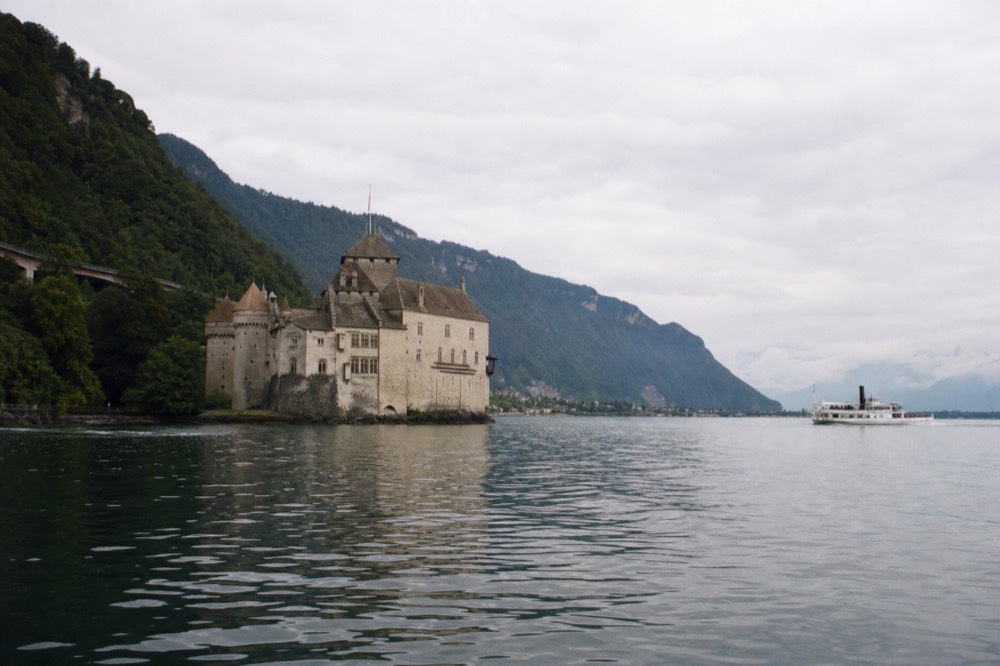
From the Montreux Riviera you get the lake's signature view: the promenade backed by mountains, the vineyards climbing behind, and the Château de Chillon a short sail south. The castle is Switzerland's most-visited historic monument, drawing close to 422,000 visitors in 2025, and the boat drops you at a landing stage beside the entrance.
Montreux is where the lake looks most like its own postcard. The promenade runs for kilometres under palm trees that the mild microclimate keeps alive, past the Freddie Mercury statue and the concert halls that host the July jazz festival. From the pier, a scheduled boat runs south along the shore to Chillon in about fifteen minutes, and the castle appears exactly as the paintings show it, a stone keep rising straight off a rock in the water.
One honest note on the castle: the boat fare gets you to the Chillon landing stage, and admission to the castle is a separate ticket bought at the gate, unless a specific listing bundles the two. Adult entry has held at CHF 15. It is worth going inside for the vaulted underground rooms that Lord Byron made famous, but budget for both tickets if you plan to. The Château de Chillon visitor pages carry the current hours and admission. For the full walkthrough of reaching it by water, see the guide on the Château de Chillon by boat.
When is the best time to visit?
Late April through mid-October is the sweet spot, when the full tourist timetable and most Belle Époque steamers are running and the Lavaux vines are green or turning gold. Summer, roughly June to late September, has the fullest schedule and the warmest evenings. The shoulder weeks, May and October, trade thinner sailings for smaller crowds and lower demand.
The lake keeps a core year-round schedule on its commuter lines, but the tourist cruises and the heritage steamers cluster in the warmer half of the year. In 2026 the main season runs from around 25 April, with the fullest summer timetable roughly from 1 June to 21 September, then a shoulder into mid-October. Winter shrinks the service to reduced routes, and some steamers lay up for maintenance, so a January visit is a different, quieter proposition.
Weather is the wildcard that no schedule controls. The bise, a cold north wind, and lake fog can cancel a sailing without much warning, which is one more reason to pick a trip that cancels free and to keep a flexible afternoon. The table sets out the trade-offs month by month.
| Season | Months | Boat service | Crowds |
|---|---|---|---|
| Spring shoulder | late April to May | Building toward full timetable | Light |
| Summer high | June to late September | Fullest schedule, most steamers | Heaviest in July and August |
| Autumn shoulder | October | Thinning, vines turning gold | Moderate, then light |
| Winter | November to April | Reduced, some routes weekend only | Sparse |
If your dates are fixed, the region still works outside summer; you simply lean on the towns and the shorter Geneva trips when the long cruises are not running. The dedicated post on the best time for a boat trip goes deeper on the seasonal timetable.
So, is it worth it, and how do you keep the cost sensible?
For nearly every Swiss itinerary, yes. The lake gives you a world-famous fountain, a UNESCO wine landscape, a storybook castle and the Alps in one compact region, reachable by cheap scheduled boat. To keep the cost sensible, take a scheduled line-cruise rather than a special one, board at a quieter town like Vevey, use a pass if you hold one, and book a free-cancellation date.
The value case is strongest at the budget end. Around twenty francs for an hour on the water in one of the world's more expensive countries is a genuinely good deal, and it happens to be a good trip rather than a cut corner. Higher up the range the value is fair rather than remarkable: a private aperitif charter or a gourmet sailing is priced for the experience, so it earns its keep on an occasion rather than as everyday sightseeing.
A few concrete moves keep the bill down without dulling the trip. Boarding the Riviera loop at Vevey instead of Montreux is the same water and the same fare with a thinner crowd. Travelling in the shoulder weeks lowers demand. And because the weather can wash out a sailing, free cancellation applies only within the selected ticket’s deadline.
The verdict is simple. If you can spare even an afternoon, the lake is worth it, and if you can spare two days it may become the part of Switzerland you remember most fondly. Start with the Geneva loop if you just want to be on the water, step up to a Riviera or Lavaux cruise if you have come for the scenery, and only pay for a private or dining boat when the occasion is the point.
Common questions about visiting Lake Geneva, Switzerland
Is this the same as Lake Geneva, Wisconsin?
No. This is Lac Léman in Switzerland and France, a crescent lake of roughly 580 square kilometres between Geneva and Montreux, backed by the Alps. Lake Geneva, Wisconsin is a small, separate US resort lake that often ranks first in American search results.
How many days should I spend at Lake Geneva?
Half a day covers a short cruise and a lakefront walk. A full day pairs a Riviera or Lavaux cruise with the Château de Chillon. Two to three days lets you base yourself here and split time between Geneva, Lausanne and the Montreux Riviera at a relaxed pace.
Is a boat trip the best way to see it?
For most visitors, yes. The Lavaux vineyards, the Château de Chillon and the Alps all read best from the water, and scheduled boats link the towns as ordinary transport. A short loop starts from about CHF 20, so it is an easy add to any itinerary.
Is Lake Geneva expensive to visit?
The lake itself is affordable to get onto, with scenic trips from about CHF 20 and Riviera cruises from about CHF 38. Switzerland is a pricey country overall, but a boat trip is one of its better-value experiences, especially free on scheduled lines with a Swiss Travel Pass.
Do I need a passport to cross to the French side?
Yes. Crossings from Lausanne or Geneva to Évian, Yvoire or Thonon are international trips to France, so carry a passport or national ID. Staying on the Swiss shore between Geneva, Lausanne, Vevey, Montreux and Chillon needs no border document.
Choose Your Lake Geneva Experience
Make the Riviera fit your itinerary: check the Montreux departure before arranging the rest of your lake day.
Montreux to Chateau de Chillon Cruise
A Riviera round trip with a close approach to Chillon and the option to stop subject to the timetable.
Compare options and tailor this choice
- Geneva: a short city-lake outing: 50-minute circuit, no eastern castle/vineyards. Mont-Blanc pier, Quai du Mont-Blanc 1. Food and drinks extra.
- Montreux: Chillon shoreline: Two-hour circuit; castle entry separate. Castle admission extra. Allow separate visiting time and confirm the return sailing.
- Lausanne: vineyard views: Three-hour route from Ouchy. Ouchy departure. English audio app; first-class upper deck optional. Meals and drinks extra.
Initial recommendation. Confirm the selected option, suitability and departure on the booking page.
Scheduled dates from Viator. Final availability and price are confirmed on Viator.
Castle admission extra. Allow separate visiting time and confirm the return sailing.