What are the top things to do around Lake Geneva?
The top things to do around Lake Geneva in Switzerland: cruise Lac Léman, tour the Château de Chillon, walk the UNESCO Lavaux vineyards, see the Jet d'Eau in Geneva, visit Lausanne, Vevey and Montreux, and cross to France. This is the Swiss lake, not Wisconsin.
 By Camille Rochat, Lake Geneva cruise specialist
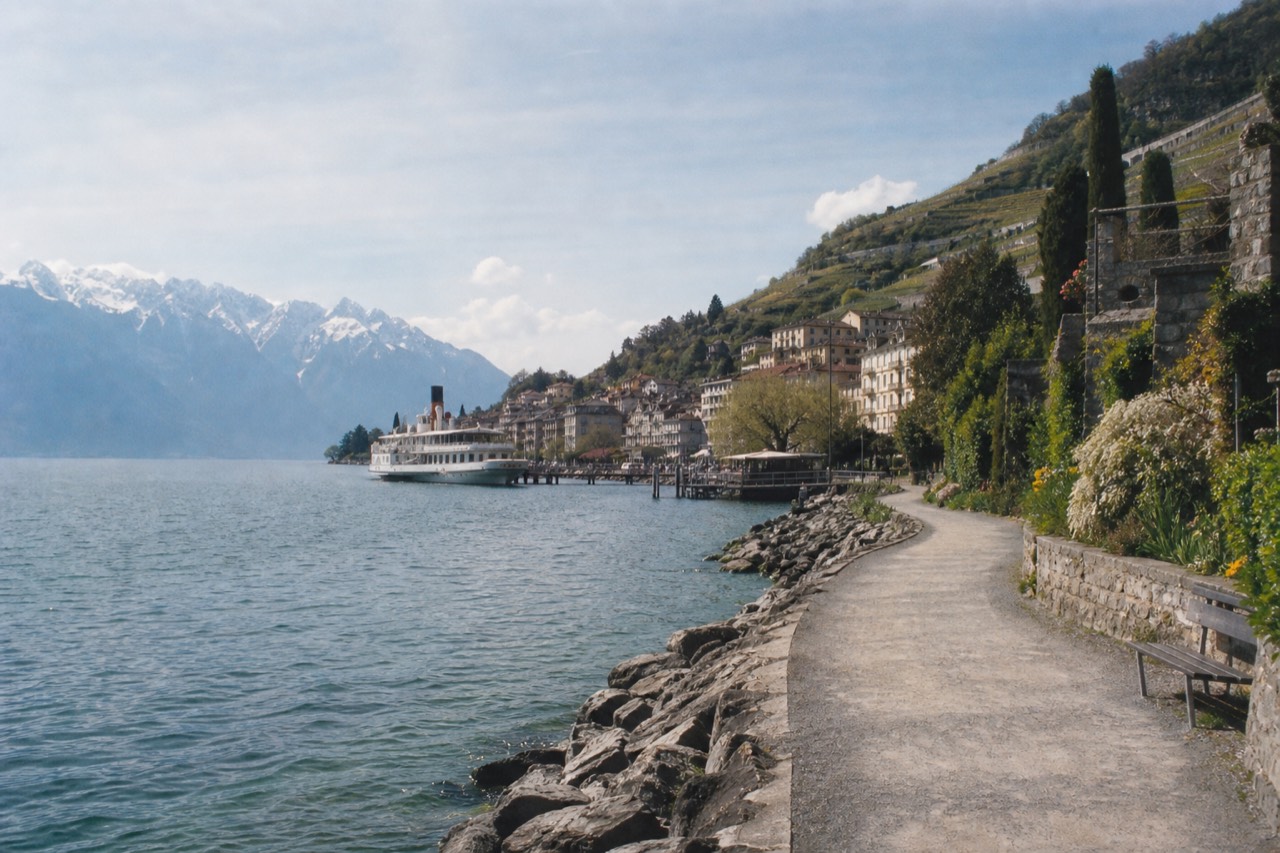
Most first-time visitors arrive at Lac Léman with a short list, usually the Jet d'Eau and maybe a castle they saw in a photo, then discover the shoreline holds far more than a day can hold. This is the Swiss lake, the long crescent of water between Geneva and Montreux with the Alps across the far side, and not Lake Geneva, Wisconsin, the small US resort lake that often tops American search results. Switzerland shares it with France, and along one shore it packs a fountain, a UNESCO wine landscape, a medieval water castle and a run of lakeside towns. The Montreux castle cruise is a practical anchor for a Riviera day, with castle entry and time inside planned separately.Explore the Chillon lake approach
The trouble with a lake this rich is choosing. Below is a grounded ranking of the top things to do, town by town, with honest notes on how long each takes, what it costs and which of them are best reached from the water. The recurring thread is that the boat is not just one activity among many here; it is also the thread that ties the others together. If you are still deciding whether the lake earns a place on your itinerary at all, the companion post on whether Lake Geneva is worth visiting weighs that first.
What are the top things to do around Lake Geneva?
The top things to do are: take a scheduled boat cruise on the lake, tour the Château de Chillon near Montreux, walk or sail past the UNESCO Lavaux vineyards, see the Jet d'Eau and Old Town in Geneva, visit the Olympic Museum in Lausanne, explore Vevey and Montreux on the Riviera, and cross to the French villages of Yvoire or Évian.
The lake rewards a mix of water and land. On the water, a cruise is the headline experience, because the best scenery, the vineyards, the castle, the Alps, all face the lake. On land, each town has a distinct draw: Geneva is the international city with the fountain, Lausanne the museum and old-town hill, Vevey and Montreux the resort Riviera, and Lavaux the working vineyard terraces in between. That concentration of celebrated sights in one small span is a big part of why Lake Geneva is so famous.
What ties it together is how close everything sits. You can watch the Jet d'Eau in the morning, sail past Lavaux at midday and stand under the walls of Chillon by late afternoon, all linked by scheduled boats. The ranked table below sorts the top experiences by what they offer and how much time each needs, so you can build a day around the ones that matter most to you.
| Thing to do | Where | Time needed | Best reached by |
|---|---|---|---|
| Cruise the lake | Any main pier | 50 min to a full day | The boat itself |
| Tour the Château de Chillon | Near Montreux | 1 to 2 hours | Boat to the landing stage |
| See the Lavaux vineyards | Lausanne to Vevey | 2 to 4 hours | Boat, or the vineyard train |
| Jet d'Eau and Geneva Old Town | Geneva | Half a day | Walking, plus a short cruise |
| Olympic Museum, Ouchy | Lausanne | 2 to 3 hours | Boat to Ouchy pier |
| Montreux promenade and Vevey | The Riviera | Half a day | Boat or lakeside walk |
| Day hop to France | Yvoire or Évian | Half to full day | Boat, passport needed |
Because the sights are spread along the shore, Lake Geneva Cruises sorts its trips by the town you set off from, so you can pick the departure closest to whatever you most want to see.
What is the single best thing to do on the lake?
The single best activity is a scheduled boat cruise, because its routes show different parts of the lake: Geneva for the fountain, Lausanne for Lavaux, and Montreux for Chillon. A short Geneva loop starts from about CHF 20, a two-hour Riviera cruise from Montreux or Vevey from about CHF 38, and a three-hour Lausanne run along Lavaux from about CHF 44.
If you do only one thing here, make it a cruise. The lake was the region's original highway, and the operator, CGN, still runs about nineteen vessels as scheduled transport between the towns, so a cruise doubles as sightseeing and as the way to get around. The Lavaux terraces were built to be read from below, and the Château de Chillon rises straight from the water, so both look their best from a deck rather than a road.
Which cruise depends on your base. From Geneva, the fifty-minute loop past the Jet d'Eau is the quick, cheap taste. From the Riviera, the two-hour Montreux or Vevey cruise is the postcard trip. From Lausanne, the three-hour run gives the longest look at the vineyards. Prices show in Swiss francs and convert to your home currency once you open a listing, and if you hold a Swiss Travel Pass, the scheduled sailings are free. The myswitzerland.com pages frame how the cruises fit a wider trip. For help choosing between routes, the guide on the Montreux Riviera loop compares the main options. If you are choosing between Swiss lakes rather than routes, the post on which lake cruise comes out best in Switzerland sets Lac Léman against Lucerne and the rest, and the guide to the best Lake Geneva boat tour picks the standout trip here.
There is a money angle worth knowing before you commit. Because the boats double as scheduled transport, a CGN day pass or a Swiss Travel Pass usually beats buying single fares once you sail more than once, and the pass makes the scheduled sailings free rather than merely discounted. The tourist trips run on a seasonal timetable, fullest from around June to late September and thinning into spring and autumn, so in the shoulder weeks you trade a lighter schedule for emptier decks and lower demand. That is the lever most first-timers miss.
What is there to do in Geneva?
Geneva, at the western tip of the lake, is built around the Jet d'Eau fountain and a compact Old Town. Highlights are the waterfront and its parks, the flower clock, the cathedral, the international quarter with the UN, and short boat loops onto the lake. Geneva's yellow Mouettes water taxis cross the harbour for about CHF 2.
Geneva packs its sights into a walkable core. The Jet d'Eau anchors the waterfront, throwing a plume about 140 metres over the harbour, and the Old Town rises behind it with the cathedral and cobbled lanes. Across the water sits the international quarter, home to the United Nations and the Red Cross, a reminder that this small city has long punched above its weight in diplomacy.
For time on the water, you have two cheap options. The scheduled fifty-minute loop takes you past the fountain and out over the Petit Lac. Cheaper still are the Mouettes, the little yellow water taxis that now run a fully electric and solar fleet, crossing the harbour in a few minutes for a couple of francs. In summer the free Rêve d'Eau water and light show plays on the lake by the Jardin Anglais. The Geneva tourism listing covers the wider city.
What is there to do in Lausanne and Ouchy?
Lausanne, the mid-lake city, is home to the Olympic Museum on the Ouchy waterfront, a steep medieval old town crowned by a Gothic cathedral, and a lively lakeside promenade. Ouchy is also the main departure pier for the Lavaux, Riviera and France cruises, which makes Lausanne a natural base for exploring the eastern lake.
Lausanne repays a half day easily. The Olympic Museum, down at Ouchy by the water, is the headline draw and one of the most visited museums in Switzerland, tracing the modern Games with real artefacts and a hillside park of sculptures. Up the hill, the old town climbs to a cathedral with a night watch that still calls the hours, a tradition kept for centuries.
The city's real advantage for a lake trip is its position. Ouchy sits mid-lake, so the boats reach in both directions from here: west toward Geneva, east along Lavaux to Vevey, Montreux and Chillon, and across to Évian in France. The three-hour Lavaux cruise leaves from Ouchy. The Lausanne tourism board covers the museum and old town. The guide on cross-border crossings to France explains the Évian hop from here.
What can you do in the Lavaux vineyards?
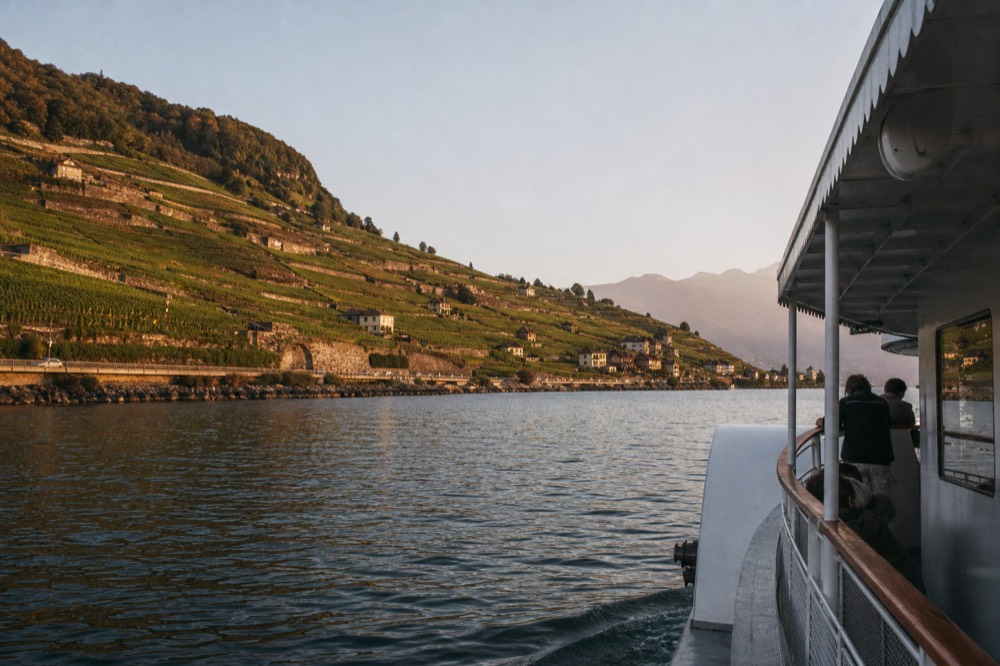
The Lavaux terraces, a UNESCO World Heritage site since 2007, stretch about thirty kilometres of stone-walled vineyards along the north shore between Lausanne and Montreux. You can walk the marked paths between wine villages, ride the little Lavaux Express road train from CHF 16, taste Chasselas at a cellar, or see the whole landscape from the water on a cruise.
Lavaux is the lake's most distinctive landscape, and there are several ways into it. On foot, marked trails link villages like Lutry, Epesses and Saint-Saphorin, threading between vines with the lake below; the walk from Lutry to Saint-Saphorin is a classic half day. For less effort, the Lavaux Express tourist train trundles loops through the terraces from April to October for CHF 16 a ticket, and the cellars in the wine villages pour Chasselas by the glass.
The catch with the terraces is that they were built to be seen from below, so the finest overall view is from the lake. A boat lines up the stone walls, the vines and the water in one frame in a way no road does, which is why the Riviera and Lavaux cruises trace the shore so closely. The Vaud tourism board covers the vineyard train and walking routes, and the guide on the Lavaux vineyard cruise details the water approach. The table sets out the ways to experience it.
| How to see Lavaux | Cost | Time | Notes |
|---|---|---|---|
| Cruise past the terraces | From about CHF 44 (3h Lausanne run) | 2 to 3 hours | The best overall view, from the water |
| Walk the vineyard trails | Free | Half a day | Lutry to Saint-Saphorin is a favourite |
| Lavaux Express road train | CHF 16 adult | About 1 hour | Runs April to October through the terraces |
| Taste at a village cellar | Varies | 1 hour plus | Chasselas is the signature white |
What is there to do in Montreux and Vevey?
Montreux and Vevey are the twin Riviera towns at the eastern end. Montreux has a palm-lined promenade, the Freddie Mercury statue, and its famous July jazz festival, plus the Château de Chillon a short sail south. Quieter Vevey has a lakeside market square and Chaplin's World, the museum in the comedian's former home in the hills above.
Montreux is the showier of the two. Its promenade runs for kilometres under trees the mild lakeside climate keeps green, past the concert halls that fill in July for the jazz festival, which marked its 60th edition in 2026. The Freddie Mercury statue on the front honours the Queen singer who lived and recorded here. In late November the promenade turns into the Montreux Noël Christmas market.
Vevey, a short hop west, is the calmer counterpart, with a broad market square opening onto the water and the food museum in a town long tied to Nestlé. Above it, Chaplin's World occupies the estate where Charlie Chaplin spent his final decades. Both towns sit on the Riviera cruise route, and the Montreux loop lasts two hours. The post on whether Montreux is worth visiting weighs the two towns against each other.
Is the Château de Chillon worth doing?
Yes. The Château de Chillon, a medieval water castle near Montreux, is Switzerland's most-visited historic monument, with close to 422,000 visitors in 2025. It rises straight from the lake, and its vaulted underground rooms inspired Lord Byron's famous poem. The boat lands at a stage beside the entrance, and castle admission is a separate ticket, adult entry around CHF 15.
Chillon is the sight most people rank at the top after a cruise, and it deserves the spot. From outside it is one of Europe's most photographed castles, a stone fortress on a rock in the water with the mountains behind. Inside, the tour runs through great halls, painted chambers and the damp underground vaults where the monk Bonivard was chained, the scene Byron turned into "The Prisoner of Chillon".
The practical notes matter. Reaching it by boat is the classic approach, since the castle was built at the water's edge, and the scheduled crossing from Montreux takes about fifteen minutes each way. Allow an hour to ninety minutes for the full circuit of halls, courtyards and vaults, and consider booking online in summer, when the castle's popularity, close to 422,000 visitors a year, can mean a wait at the gate. The boat fare and the castle ticket are separate, so budget for both if you want to go inside; hours and admission are on the Château de Chillon visitor pages. For the full route detail, the guide on reaching the castle by boat covers landing stage, timings and combined tickets. Whether the interior is worth the separate admission is weighed in the post on going inside Chillon Castle.
Can you cross to France for the day?
Yes. Scheduled boats cross to the French south shore, most usefully to the medieval village of Yvoire, the spa town of Évian, and Thonon-les-Bains. These are international trips, so carry a passport or national ID. The Lausanne to Évian crossing runs from about CHF 44 and takes roughly thirty-five minutes each way.
The French shore adds a second country to a lake day, and the crossings are short. Yvoire is the star: a walled medieval village of stone houses and flower gardens that juts into the lake, easily walked in a couple of hours. Évian, further east, is the spa town behind the mineral water, with belle-époque architecture and lakeside gardens. Thonon-les-Bains is the larger, more workaday French port between them.
Yvoire in particular rewards the crossing. Its lanes of stone houses and flower gardens sit on a small headland that juts into the lake, and half a day is enough to walk it, eat by the water and sail back. From the Swiss shore the usual boarding points are Geneva and Nyon for Yvoire, and Lausanne for Évian and Thonon, though these France crossings run less often and more seasonally than the Swiss-shore routes.
The one thing to remember is that this is a border. Even though the boat never leaves the lake, crossing from the Swiss shore to a French port is an international journey, so bring a passport or national ID, and check the timetable before you build a day around it. A Swiss Travel Pass still covers the scheduled cross-border line-cruises. The table below lays out the main French ports.
| French port | What it is | Getting there | Bring |
|---|---|---|---|
| Yvoire | Walled medieval village, gardens | Boat from Geneva or Nyon | Passport or ID |
| Évian-les-Bains | Spa town, lakeside gardens | Boat from Lausanne, about 35 min | Passport or ID |
| Thonon-les-Bains | Larger French lake port | Boat from Lausanne or Nyon | Passport or ID |
How do you tie it together in one trip?
Build the trip around your time. One day: a Riviera cruise plus the Château de Chillon. Two days: add Geneva and the Jet d'Eau, and Lausanne's Olympic Museum. Three days: fold in the Lavaux vineyards on foot or by the wine train, and a boat hop to France. The scheduled boats link every stop, so a pass or day ticket earns its keep.
The lake is compact enough that a sensible plan flows along the shore rather than doubling back. A one-day visitor is best basing on the Riviera, sailing to Chillon and touring the castle, then walking the Montreux promenade at dusk. Two days lets you add the Geneva end, with the fountain and Old Town, and the Lausanne museum in between. Three days opens up the slower pleasures: a vineyard walk in Lavaux, a tasting, an afternoon across the water in Yvoire.
Whichever length you pick, the boat network is the spine. If you are moving between several towns and sailing more than once, a CGN day pass or a Swiss Travel Pass usually beats buying single fares, and the shoulder-season weeks trade a thinner timetable for smaller crowds. The post on the best time for a boat trip covers the seasonal schedule.
A simple rule keeps the plan sane: pick a base on the water, either Geneva for the city end or Montreux and Vevey for the Riviera, and let the boats carry you out and back rather than dragging luggage between towns each night. Two nights on the Riviera puts the castle, the vineyards and the France crossings all within a short sail, and leaves the Geneva end as an easy day trip by train. Handled that way, the lake stays the point of the trip rather than a checklist to rush through.
There is more around this lake than any single visit can absorb, which is the good problem to have. Anchor each day on a cruise, let the boat carry you between the fountain, the vineyards, the castle and the Riviera towns, and the shoreline stops feeling like a list of separate sights and starts feeling like one continuous view.
Common questions about things to do around Lake Geneva
Is this Lake Geneva in Switzerland or Wisconsin?
Switzerland. This is Lac Léman, the large crescent lake shared by Switzerland and France, between Geneva and Montreux. Lake Geneva, Wisconsin is a small, separate US resort lake that often ranks first in American search results, which is why the two are easily mixed up.
What is the number one thing to do at Lake Geneva?
Take a scheduled boat cruise. Choose the route for the landmark you want: Geneva for the fountain, Lausanne for Lavaux, or Montreux for Chillon. Scheduled boats also link lakeside towns. Short loops start from about CHF 20.
How many days do you need around Lake Geneva?
One day covers a Riviera cruise and the Château de Chillon. Two days add Geneva and Lausanne. Three days let you walk the Lavaux vineyards and hop across to France. The scheduled boats link every stop, so a day pass or Swiss Travel Pass is often worth it.
Can you visit France from Lake Geneva?
Yes. Scheduled boats cross to the French shore, most usefully to the medieval village of Yvoire and the spa town of Évian, with Thonon in between. These are international trips, so carry a passport or national ID. The Lausanne to Évian crossing runs from about CHF 44.
Do you need to book cruises in advance?
For a simple scheduled loop you can often buy on the day, but summer sailings and the popular Château de Chillon crossings fill up, so booking ahead secures your date. Check the cancellation deadline and weather policy for your selected ticket before paying; free cancellation has a cutoff.
Choose Your Lake Geneva Experience
Have a Riviera day in mind? Check the Montreux cruise date before arranging the castle visit and your return travel.
Montreux to Chateau de Chillon Cruise
A Riviera round trip with a close approach to Chillon and the option to stop subject to the timetable.
Compare options and tailor this choice
- Castle approach from Montreux: Close Chillon approach and optional stop, castle entry separate. Castle admission extra. Allow separate visiting time and confirm the return sailing.
- Vineyard scenery from Lausanne: Lavaux views on a three-hour cruise from Ouchy. Ouchy departure. Allow 3 hours; confirm your selected sailing and any stopover. Meals and castle entry extra.
- France from Lausanne: Return crossing to Évian with independent time ashore. Time in Évian is additional. Check the return timetable and your border documents. No guided town tour.
Initial recommendation. Confirm the selected option, suitability and departure on the booking page.
Scheduled dates from Viator. Final availability and price are confirmed on Viator.
Castle admission extra. Allow separate visiting time and confirm the return sailing.